Most business owners we talk to are at the same point with AI. They know it matters. They've read the articles, they've seen someone at a conference show a demo, and they've had the quiet thought that they should probably do something about it. But they haven't.
What stops them is the shape of the thing in their head. An "AI project" looks enormous: a full rebuild, a strategy offsite, a six-figure quote, six months of consultants. That shape is expensive enough and slow enough that it never quite gets started. So the conversation stays a conversation.
The trick is to change the shape.
The rule
The first AI build in any business should aim to save one person roughly three hours a week. That's it.
From one person, on one task. That's 150 hours a year - without hiring anyone.
Not a day. Not the whole role. Three hours, off one specific task, on a repeatable cadence.
Why so small
Because small ships. And nothing else does.
It lands in weeks. A three-hour-a-week build has a well-defined edge. One task, one input format, one output. Six to eight weeks and it's live. A team can hold that in their head. They can't hold an 18-month rebuild.
Nobody has to reorganise their job around it. The person whose task you're changing carries on doing everything else. If it works, great. If it doesn't, they lost a fortnight. Nobody rewrote their calendar.
Failure is cheap. Three-hour builds fail. That's fine. You learned what the tool can't yet do, what your data actually looks like, and which part of the workflow is fragile. The next build costs less because you now know things you didn't before.
It teaches you what to build next. This is the part that gets skipped. The transformational plan assumes you already know what the end state should be. You don't. You'll know once you've shipped one small thing and watched it run for a month.
What three hours compounds to
Three hours a week is 150 hours a year. From one person, on one task. Do it three times across a team of five and you've bought back roughly three months of headcount without hiring anyone.
Do it a dozen times and the maths starts to look silly. Which is the point.
The Toyota version of this argument
There's a version of this story from post-war Japan. Toyota was small, broke, and rebuilding. They couldn't afford the sort of factories GM and Ford were running, so Taiichi Ohno built the Toyota Production System around a rule that sounded almost embarrassing: every worker on the line is expected to suggest improvements, and management is expected to implement them. Not big ones. Tiny ones. A few seconds off a step. A better place to hang a tool. By 1990 Toyota's employees in Japan alone were submitting close to two million suggestions a year, and the company was implementing around 97 percent of them.
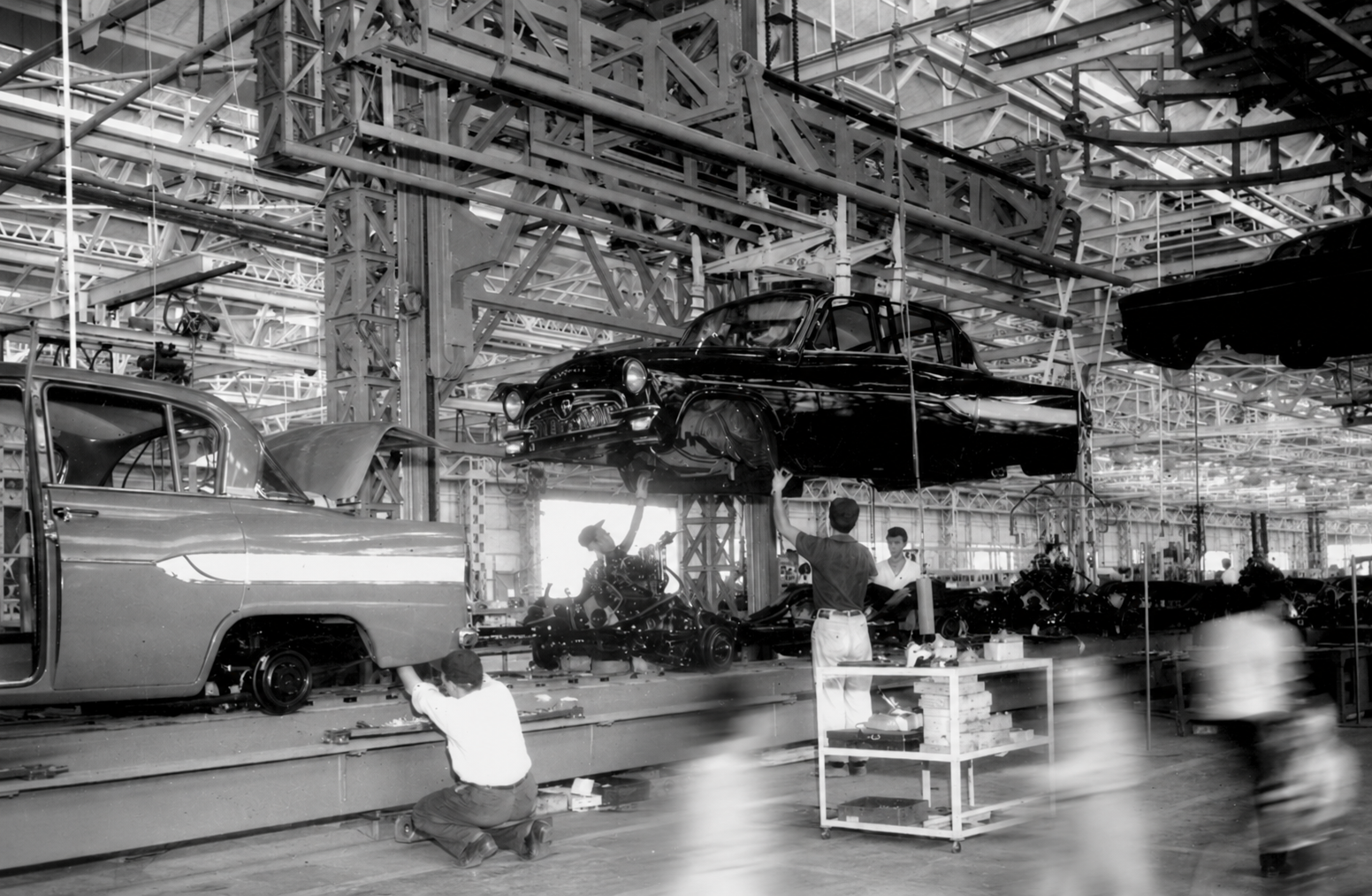
GM took the opposite bet. In the 1980s, CEO Roger Smith spent roughly $90 billion over the decade on what he called the Factory of the Future - transformational robotics, whole plants rebuilt at once, the leap that would settle the Japanese question. The robots welded doors shut and painted each other instead of the cars. Productivity fell. GM went from Detroit's lowest-cost producer to its highest-cost one. Two decades later GM was bankrupt. Toyota was the largest carmaker in the world.
That's what the three-hour rule is for. Not because ambition is bad, but because compounding is how ambition pays. Ship the small one. Learn what it taught you. Ship the next. The transformational build isn't built. It compounds.
What people believe that keeps them stuck
Two beliefs, mostly.
"Small doesn't move the needle." A three-hour saving on one task looks trivial when you write it up as a business case. So the business case never gets written and the build never gets attempted. Meanwhile the twelve small builds you didn't do would have compounded to a full year of headcount by now. Small is only trivial in isolation.
"If we're going to do AI, we should do it properly." Underneath this belief is a fear of looking under-ambitious. The reality is the opposite. The businesses that ship AI properly are the ones running a lot of small builds and stringing them together. The businesses running one big project are the ones that haven't shipped anything.
What to do this week
Pick the task. One person, one repeatable job, three hours a week or thereabouts. Not the most impressive one, the most repetitive one. The person doing it should be able to describe the steps in the same order every single time.
That's the shape of a good first build. If you can name one before you finish reading this sentence, you're closer than most.